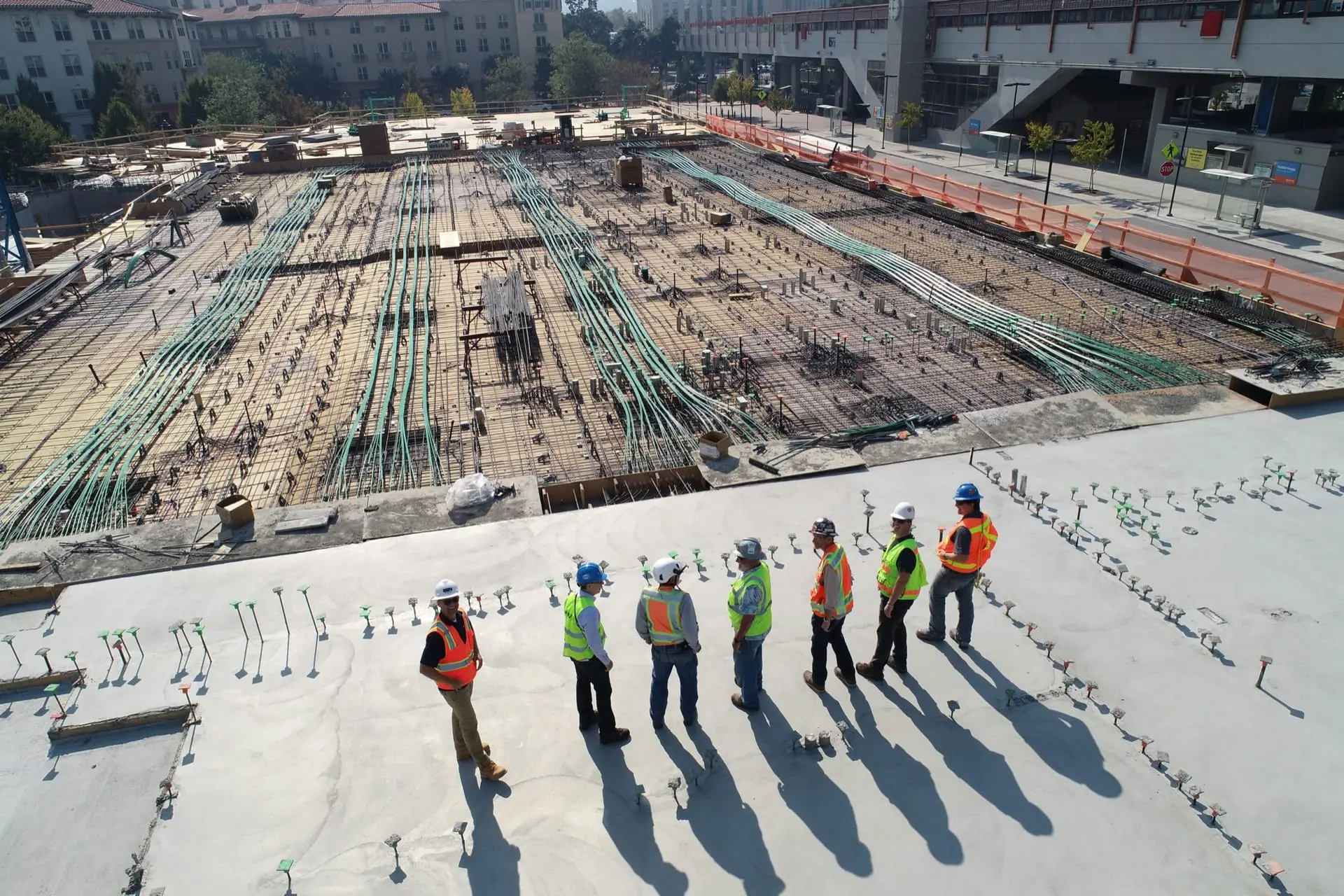
There is a scene that repeats at shift handover in most manufacturing plants. The job sequence produced overnight by the planning engine is printed, posted at the head of the line, and, before the first two hours have elapsed, renumbered in pen by the shift supervisor. The second and fourth jobs trade places, the sixth is pushed to the end of the shift, and a job that appears nowhere on the list is inserted between two others; by close of day the sequence actually run differs materially from the sequence published that morning. Because no one has defined where that difference should be recorded, it is recorded nowhere, and the following morning the engine regenerates a plan from the realized state, closing the loop in exactly the same shape. Over time the morning output ceases to be an instruction to be followed and becomes the opening position in a negotiation.
The same pattern surfaces from different angles in distribution routing, field installation calendars and multi-plant production allocation: the driver who reorders the optimizer's stop list according to their own knowledge of the territory, the crew lead who resequences an installation calendar against weather and site-access conditions, the load split between two factories that reaches its final form in a phone call between plant managers. What is notable is that the divergence is rarely named internally as a failure at all. The planning team refers to the engine's output as the plan; the floor refers to its own arrangement as the real plan; and an organization can carry that duality for years without visible friction. The gain promised in the business case that justified the system investment, however, never becomes measurable for as long as the duality persists.
This pattern is algorithmic scheduling failure — a scheduling model producing a plan that is internally consistent in mathematical terms while being invalid in terms of executability — and its mechanism, contrary to what the name suggests, sits not in the inadequacy of the solver but in the representation the solver operates on. An optimization engine does not optimize the plant; it optimizes the written version of the plant, and any condition that has not entered the constraint set does not exist as far as the model is concerned. The plant, meanwhile, runs on the sum of its written and unwritten constraints. The engine therefore returns a correct answer to a question that has drifted, and the flawless run producing an unworkable plan is the direct arithmetic of the difference between those two sets.
The representation gap is typically fed from three layers. The first consists of constraints never written down: the competency matrix governing which operator is certified on which machine, the physical transfer time of a single-copy die or fixture between two jobs, the cleaning sequence imposed by color or allergen changeovers, the forklift traffic between two lines that locks up at predictable hours of the day. The second consists of constraints whose validity has expired: a machine removed a year ago still occupying a row in the capacity table, a setup time improved three times over still carried at its first calibration value, a delivery window belonging to a supplier no longer used still living in the parameter file. The third consists of costs the objective function never carries at all — overtime, occupation of floor space by buffer inventory, and the rescheduling burden created by a lot held in quality quarantine.
Reading this tendency as irrationality would be misleading. On a line running a narrow product mix at high volume and low variance, the optimization engine outperforms intuition-based sequencing by a visible margin, and deference to the model genuinely lowers the cost of daily decision-making. The difficulty lies not in the shortcut itself but in the shortcut remaining fixed once conditions change: as the product mix widens, as a new line is commissioned, as the supplier base turns over, or as the customer order profile fragments into smaller and more frequent lots, the representation begins to age. In most organizations that representation is calibrated once as a deliverable of the implementation project and then left without defined ownership, treated as a completed project artifact rather than as a living record. The fact that the engine continues to run every day tends to create the impression that the representation is being updated every day, and aging remains invisible to that same degree.
The first layer of institutional cost is informational. Where the rationale for the difference between the published sequence and the executed sequence is not captured, the plant's real constraint set accumulates nowhere, and its only carrier becomes the memory of whoever corrects the sequence by hand each morning. Even where plan adherence is measured, the measurement is frequently taken against the plan as revised at the end of the shift, so the metric reports the performance of a plan already fitted to the outcome rather than the performance of the plan as issued. Under those conditions the scheduling performance indicator that reaches the board is structurally obliged to read high, and the friction beneath it appears in no report.
The second layer is directly financial, and the items fall in predictable places. An unworkable plan is most often absorbed by work-in-process: the line protects itself against planning error with buffer stock, and that protection shows up in the working capital cycle as a slower inventory turn. Overtime, expedited freight invoices and premiums paid for emergency pulls from suppliers follow in sequence. More consequential still is that capacity decisions are taken on the strength of the distorted representation — a line showing high utilization in the model while standing idle on the floor can trigger a new capacity investment, or, in the reverse case, a bottleneck that looks comfortable in the model can drop off the investment list entirely. The cost of a misallocation of that kind runs an order of magnitude above the entire license fee of the scheduling software.
The third layer becomes visible at the valuation table. Where the buy-side question of how scheduling is performed returns the name of a person rather than the name of a system, the diligence team files the answer as operational continuity risk, since delivery performance cannot be shown to be repeatable independently of the founder or of a single production manager. The typical consequence is less a direct cut to the headline price than a tightening of the transaction structure: an earn-out trigger tied to delivery performance, a pre-closing condition requiring key personnel to remain, an expansion of the operational representations and warranties, an escrow ratio pulled upward. Capitalized planning software, to the extent that it is not in genuine use, is treated in the valuation work not as an asset but as a question mark carried forward into the negotiation.
The mechanism that neutralizes this tendency is neither a stronger solver nor more frequent training, but the conversion of the representation into an institutional record, and it has four separable components. The first is a constraint register in which every constraint carries an owner, a stated rationale and a validity date, with any expired entry falling automatically into review. The second is a deviation log, where the critical detail is timing — the deviation is captured at the moment the change is made rather than at the end of the shift, and against a short closed list of reason codes, since a log written after the fact degrades into a narrative rationalized around the outcome. The third is objective-function governance: the weights among lateness penalty, setup cost and inventory holding cost constitute a commercial decision rather than an engineering setting, and ownership is therefore defined on the commercial side. The fourth is an authorized deviation band, because once the width within which the supervisor may act and the threshold beyond which approval is required are written down, deviation stops being insubordination and becomes feedback into the system.
When BEIREK examines the scheduling architecture of a production or supply line, the entry point is the constraint inventory rather than the solver parameters: the constraints the model recognizes are placed alongside the constraints the line actually observes, and the difference between them is carried into a single record that has an owner and a validity date. A deviation log against a limited set of reason codes is then run across several scheduling cycles, and the frequency distribution that emerges from it indicates not where the model is wrong but where the representation has aged, with the improvement sequence built from that distribution. Objective-function weights are treated not as a fixed parameter but as an item tied to a regular review cadence at which the commercial and operational sides sit together.
On the investment readiness side the same material serves a different purpose. The existence of a plan adherence record, the distribution of deviation reasons and the currency of the constraint register together form a documentable evidence chain showing that delivery performance is repeatable independently of individuals. What persuades an acquirer on operational continuity is not that the process is described well but that the process produces its own record, and where such a record exists the earn-out and escrow negotiation proceeds on visibly different ground. The same document set also supplies the starting point for the post-closing integration plan, given that what an acquirer most often loses in the first six months is not capacity but constraint knowledge that no one had written down.
The quality of a scheduling engine is measured not by the mathematical optimality of the solution it produces but by the maintenance cadence of the plant representation on which it runs; a plan that dissolves on the floor while the engine performs correctly indicates that the question, rather than the answer, has aged. The operative question at a management table reviewing planning performance is therefore not whether the model is working correctly, but whether the plant the model describes still exists.