Atome's $665M Villeta FID: The Sequencing Closure Beneath the Headline
Atome's Final Investment Decision on a 60,000 tpa green hydrogen-based fertilizer plant in Villeta, Paraguay registers as a milestone, but the actual mechanic underneath is the closure of a four-stream sequencing problem — DFI covenants, equity-partner reserved-matter rights, EPC and electrolyser price-lock, and offtake bankability all converging in the same quarter. Any one of them lagging by a quarter does not produce a slightly later FID; it pushes the entire decision into the next window.
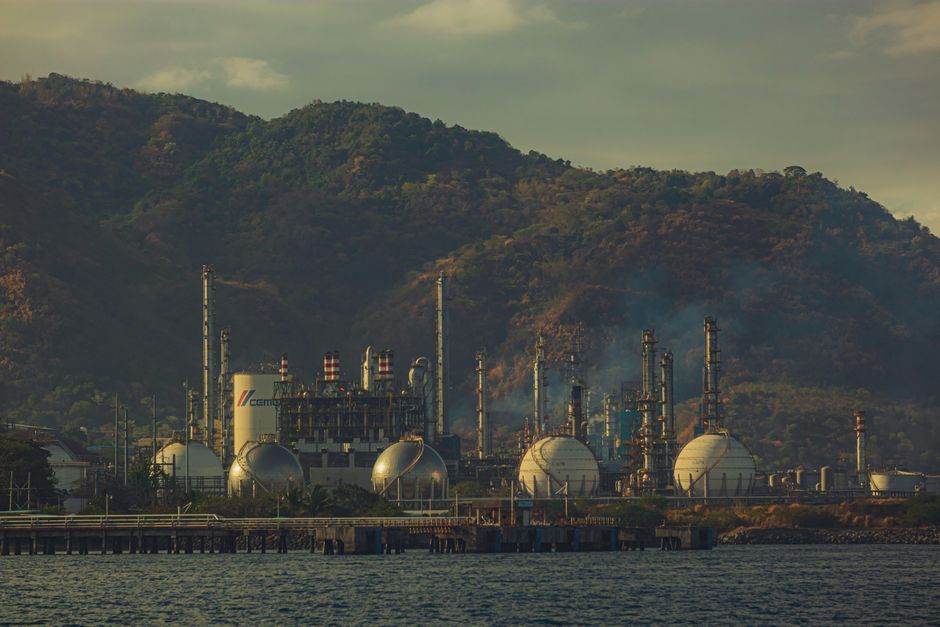
The disclosure that Atome PLC has taken Final Investment Decision on a 60,000 tonnes-per-annum green hydrogen-based fertilizer plant at Villeta, Paraguay, with total project cost stated at $665 million and first production targeted for 2029, registers in the headlines as a discrete event — a board resolution, a press line, a milestone marker on a development timeline. Read against the actual mechanics of how such a decision is built, however, the FID is not a moment at all but the closure of a sequencing problem, the point at which four parallel workstreams — DFI covenant packages, equity-partner reserved-matter rights, EPC and electrolyser price-lock, and offtake bankability — converge at the same calendar quarter and remain converged long enough for the documents to execute. Any one of these workstreams lagging by a single quarter does not produce a slightly later FID; it pushes the entire decision into the next window, because the others either re-open or expire while the laggard catches up.
The configuration that produces a transaction of this kind in a jurisdiction like Paraguay is itself worth pausing on. The country has no prior green ammonia comparable, no domestic offtake market of meaningful depth for the molecule, and a host-country grid framework whose viability rests almost entirely on its share of Itaipú-linked hydroelectric tariffs — a binational arrangement that introduces a sovereign-counterparty layer beneath every other commercial assumption in the deal. The implied capex intensity, roughly $11,000 per tonne of annual nameplate against the 60,000 tpa figure, sits in a range DFI credit committees will benchmark not against headline ammonia route comparables but against the specific class of first-of-kind electrolyser-to-Haber-Bosch integrations executed in jurisdictions without prior reference plants — a much narrower comparable set, and one in which schedule slippage and capex overrun have a documented track record.
The DFI covenant package, taken on its own, is the workstream that most often dictates the rhythm of the FID closure. A blend of multilateral debt and equity-partner capital implies that the deal has cleared environmental and social safeguards, integrity due diligence, and country-risk subcommittees inside more than one institution in parallel; each institution runs on its own committee calendar, applies its own version of Equator Principles or in-house safeguard standards, and reserves the right to introduce revised conditions precedent up to the moment of signing. The covenants typical of such a package — debt service coverage thresholds, project completion guarantees, restricted distribution gates, environmental and social action plans with hard deadlines — interlock with the EPC contract and the offtake structure in ways that are invisible until one party moves a clause and the dependent clauses elsewhere collapse. Holding this package coherent across multiple lenders is not legal review; it is configuration management, and it is where most green hydrogen FIDs in emerging jurisdictions actually slip.
The equity partner layer adds a second axis of timing risk that is rarely surfaced in public commentary. Reserved-matter rights — the catalogue of decisions that require unanimous or supermajority shareholder consent rather than ordinary board approval — typically expand as the deal moves from term sheet to shareholders' agreement, and each expansion creates a new gating point on FID. A partner that sees its reserved-matter list grow during long-form negotiation will often defend the additions by linking them to specific risk allocations in the lender package, which means equity governance and debt covenants are negotiated in mutual reference rather than in sequence. The practical consequence is that the equity closing cannot be prepared in isolation from the DFI documents, and the DFI documents cannot be finalized without sight of the reserved-matter schedule — a circularity that, managed badly, produces months of drift, and managed well, produces a single coordinated execution.
The EPC and electrolyser price-lock workstream operates on a different clock altogether. A 36-month construction window from a 2026 FID to a 2029 production target is, for a first-of-kind integrated facility combining electrolysis at scale with downstream Haber-Bosch synthesis, an aggressive schedule that depends entirely on the EPC and electrolyser supply contracts being substantially locked in before the FID memo is drafted. Electrolyser OEM order books across the industry's tier-one suppliers have shifted from buyer-friendly to seller-friendly over the last development cycle, which means price-lock terms now carry escalation triggers tied to commodity inputs and capacity allocation clauses that prioritise earlier signatories — the FID window therefore narrows further when the supplier's slot in its own production pipeline is itself a contested resource. Locking the EPC and locking the electrolyser are not the same negotiation, and the moment one is signed, the other's negotiating position shifts.
The offtake bankability question is where the Itaipú-linked grid framework reasserts itself. The economics of green ammonia depend on the delivered electricity tariff being low enough and stable enough across the financing tenor to make the project's levelised cost competitive against grey ammonia at the relevant import-parity price; in Paraguay's case, that low-cost stability is real in the operational sense but rests on a binational treaty arrangement whose tariff revisions are politically determined and not contractually fixed at the project level. DFI lenders addressing this layer typically do not rely on the host-country PPA alone; they require either put-option mechanics that allow the project company to put unsold production at a floor price, partial risk guarantees that wrap the sovereign exposure, or some combination layered with offtake side letters from creditworthy ammonia traders. The bankability of the offtake is therefore not just about who buys the molecule but about how the residual sovereign exposure is sliced and where it lands.
The vulnerability inherent in this configuration is not that any single workstream fails — failure is rare and visible — but that one workstream moves at a pace inconsistent with the others, and the cumulative drift exceeds the validity period of the most date-sensitive document. Term sheets expire. Equipment quotes expire. Equity commitment letters carry conditions that lapse. Lender approvals are typically valid for a defined window after credit committee, after which a refresh is required and material adverse change provisions are reread against intervening market data. The FID closure, in that sense, behaves like a multi-key authentication event in which all keys must be present and valid at the same instant — and a project sponsor that has not built the apparatus to hold all four workstreams in synchronised state will find itself, more often than not, watching a fully negotiated deal expire because one signatory's process took ten weeks and another's took twelve.
BEIREK's IFI and DFI relationship management practice operates inside this sequencing problem rather than around it. We run the requirements library across multiple lender packages in parallel, mapping each institution's safeguard catalogue, conditions precedent, reporting obligations, and committee calendar into a single traceability layer that exposes — in advance — which clause in the EPC contract triggers which covenant under which lender's package, and where the language of the offtake side letter must align with the disbursement schedule. The lender-grade reporting infrastructure that DFI credit committees expect from day one is built before signing, not retrofitted after first disbursement, because retrofitting reporting under live covenants is the failure mode that produces drawstop notices and equity bridge calls in the early operating quarters.
We also coordinate the closure window itself — the calendar discipline that holds the four workstreams in mutual reference, that flags when one institution's pace is about to break the synchronisation of the others, that surfaces the reserved-matter schedule against the covenant schedule against the EPC milestone schedule before the divergence becomes binding. The FID memorandum is the visible artifact, but the apparatus underneath it — the configuration management of clauses across documents, the lender-package coherence, the synchronisation of independent committee calendars — is where the actual work of closing sits, and it is the work that determines whether a green hydrogen project of this scale lands on its disclosed timeline or quietly slips into a subsequent development cycle.
The Atome FID at Villeta is, on its public surface, a financing milestone for the Latin American hydrogen economy. Read with attention to the underlying mechanics, it is something more specific: a demonstration that the four-stream synchronisation can be achieved in a jurisdiction without a prior green ammonia comparable, on a 36-month construction schedule, with capital structures that span multilateral debt and private equity in a single package. The question for the next class of green hydrogen sponsors is not whether their projects are economically viable on paper, but whether the apparatus that holds the FID closure together is built before the workstreams begin to drift — because once drift begins, the recovery cost is measured not in months but in development cycles.
References
- pv magazine, "The Hydrogen Stream: Atome builds $665 million green hydrogen-based fertilizer plant in Paraguay", pv magazine, April 24 2026. https://www.pv-magazine.com/2026/04/24/the-hydrogen-stream-atome-builds-665-million-green-hydrogen-based-fertilizer-plant-in-paraguay/
- International Finance Corporation, "Performance Standards on Environmental and Social Sustainability", IFC, January 2012. https://www.ifc.org/en/insights-reports/2012/publications-handbook-pps
- Equator Principles Association, "The Equator Principles EP4", Equator Principles, July 2020. https://equator-principles.com/about-the-equator-principles/
- International Energy Agency, "Global Hydrogen Review 2024", IEA, October 2024. https://www.iea.org/reports/global-hydrogen-review-2024
- International Renewable Energy Agency, "Innovation Outlook: Renewable Ammonia", IRENA and Ammonia Energy Association, May 2022. https://www.irena.org/publications/2022/May/Innovation-Outlook-Renewable-Ammonia
Continue Reading